Credit Card Basics
This is tailored to a younger audience, or those who do not have a credit card yet. This post will simplify how credit cards work and the most efficient/smart way to use them. If used correctly, credit cards can be a great financial tool. The problem is, most Americans do not use them correctly, or even worse, abuse them.
Credit Card Basics
Credit Limit: This is the maximum amount you are able to spend without making a payment.
Current Balance: The amount you owe, which you have not yet paid back.
Available Credit: The amount left of your credit limit you are able to spend.
Payment Due Date: The date which at least the minimum payment is due
Annual Fee: Some credit cards charge an annual fee which is tacked onto your balance each year. These are usually cards with greater perks and rewards, or for those with poor credit that do not qualify for better cards.
Payments: The amount you pay the credit card company back
Minimum Payment: Typically a fixed amount (ie., $25 or $40). This is the minimum amount you must pay each month to keep your account in good standing.
If you only make your minimum monthly payment, you will “carry a balance” which means you did not pay the credit card in full and your balance will start to accrue interest.
If you do not make at least the minimum payment each month, you may face fees, hits to your credit score, and even account closure.
Fixed Payment: You can pay a fixed amount if you would like to reduce potential interest charges. This can be a one time payment or set up recurring payments.
Recurring Payments: A fixed amount you pay each month, typically greater than the minimum payment, again, to reduce your balance and interest charges.
Automatic Payment: It is a good idea to set up automatic payments so you do not accidentally miss a payment.
This can be set up to pay the minimum payment, fixed payment, or entire balance.
Full Balance Payment: This means you pay the entire amount that you spent on your credit card. This allows you to ensure you that you will not accrue any interest charges
APR/Interest: APR is the “annual percentage rate”. You will see this vary depending on your credit history and worthiness.
Ex. If your APR is 24%, this means that if you carry a balance, each month the balance will increase by 24%/12 months, which is 2%. So if you carry a balance of $1,000, you will accrue $20 worth of interest and your new payable balance the next month will be $1,020. This can accrue quickly if not taken seriously, so let me run a simulation to show you how fast this occurs.
6 months of accruing interest on your credit card
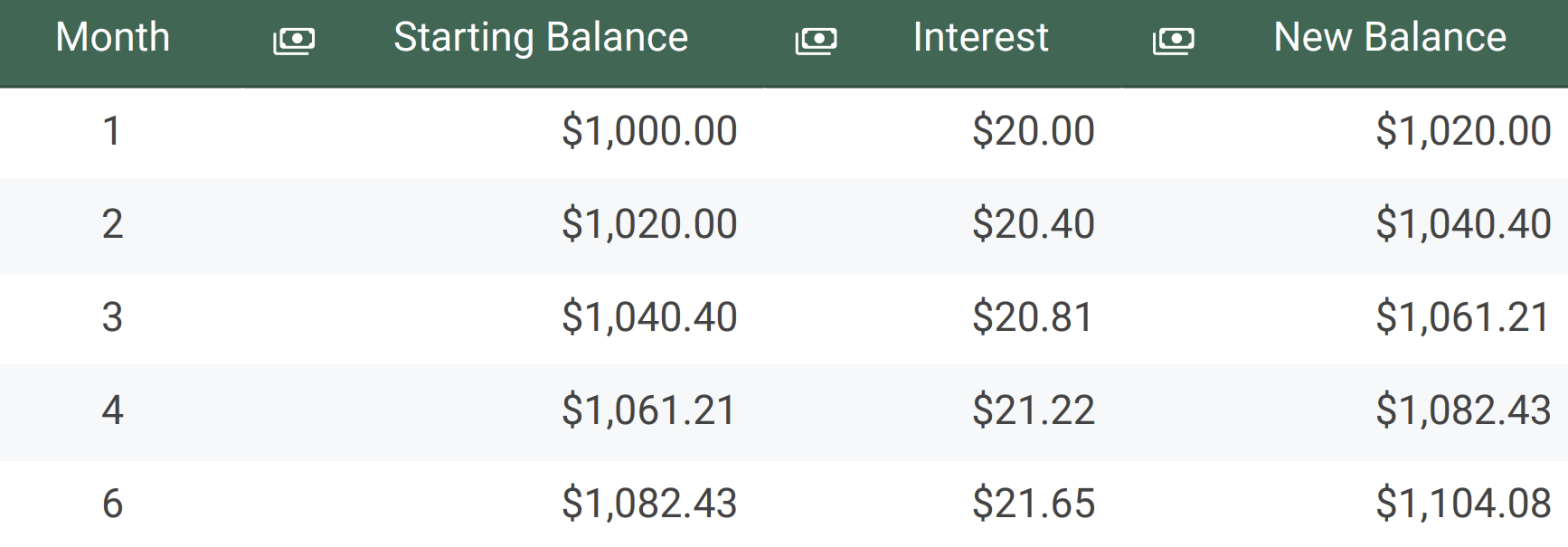
This table depicts a simulation of a credit card balance accruing interest over a 6 month period. This does not account for payments or purchases for the sake of understanding. APR: 24% (2% each month).
As you can see on the table above, after just 6 months of carrying a balance, your $1,000 you did not pay back accrued $104.08 in interest that you must pay. It’s notable that each month, the amount of interest accruing increases. This is compound interest, but not the good kind. Make sure to pay your balance in full every month to avoid this.
Now that you know the basics of how a credit card works, let’s go over some perks of many credit cards.
Rewards: Some credit cards offer rewards for purchases you make
Cash Back: a percentage of the amount of your purchases
Statement credit: money you can pay your balance back with
Cash: money you can put in your bank account and do whatever you want with
Travel Credit: Money you can use for flights, hotels, etc., typically through the credit card company’s portal or a partnered airline/hotel.
A “Cash Back” credit card is a great first credit card to get. They will typically offer a fixed percentage back on all purchases. A couple notable credit cards (which I use) are the
Wells Fargo Active Cash: Unlimited 2% cash back on all purchases, regardless of what you purchase.
Chase Freedom Unlimited: Unlimited 1.5% cash back on all purchases, regardless of what you purchase.
This card also offers 3% cash back on restaurants and drug stores.
These 2 cards are just examples and offer many more benefits and cash back opportunities. The goal here is to understand that many cards have a cash back feature. Check out my other content on credit cards for a better understanding of what certain cards offer.
When shopping for which credit card you may want to apply for, it is important to look out for a few things.
Understand Your Credit Score: Click here to learn all about what a credit score is and what its made up of.
Rewards: Pick a credit card that best suits your needs. If you travel a lot, a travel credit card may be a good option. If you like to keep things simple, a credit card that offers a set percentage cash back on all purchases may be a good idea.
Welcome Offers: Many credit cards offer a welcome bonus, which varies, but is typically if you spend a certian amount of money on the card in the first X number of months, they will reward you with a fixed amount of cash back
Intro APR: Some credit cards offer a grace period where you will not accrue interest. This sounds great, can be great if used correctly, but these credit card companies are predatory and know what their doing. Don’t get used to not paying the full balance every month, because that’s what they want you to do and how they make their money.
Annual Fee: Unless it’s reasonable that you will earn rewards in great excess to the annual fee, avoid picking a card with an annual fee. Again, the credit card companies profit from you earning less in rewards than you pay in fees.
APR: This can be slightly out of your control, but pay attention to the APR offered on the credit card. Some companies will give you an offer as high as 36.99% APR. Yes, I’ve seen it. That is not good.
It is important to read through the terms and conditions of each credit card that you apply for. It’s lengthy but it will ensure that you understand what it has so offer and your obligations
